30 Day Money Back Guarantee
Rated 5.0 on Google Reviews
Call Now +1 (866) 589-9392
Delivery Across North America 🚚
30 Day Money Back Guarantee
Rated 5.0 on Google Reviews
Call Now +1 (866) 589-9392
Delivery Across North America 🚚
Remote projects come with a problem that city projects never face: everything has to be brought in. Mining exploration, forestry operations, pipeline and utility work, wind and solar installations, research stations, northern construction, island developments, and disaster recovery sites are often hours or days from the nearest town. There are no local electricians, plumbers, or carpenters, no hardware store down the road, and no hotel for the crew at the end of the day.
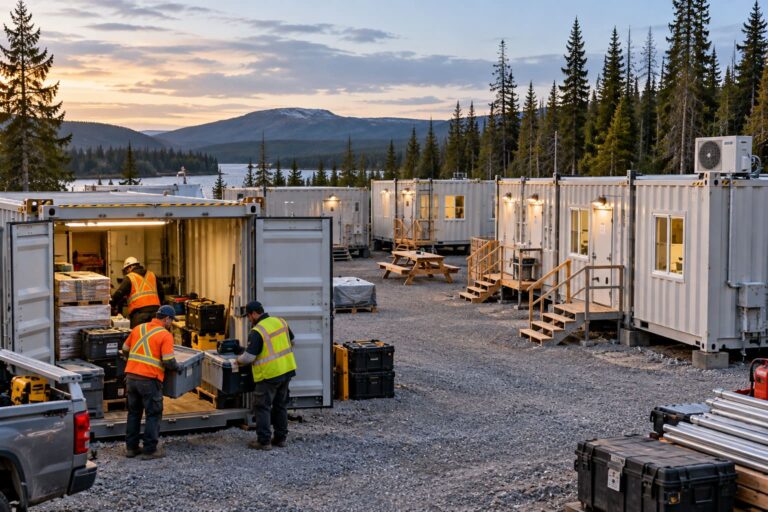
Shipping containers solve this in a way few other options can. They can be built out into offices, washrooms, and living quarters in a city where every trade and supply is readily available, then loaded with everything the project needs and shipped to site as a complete package. When the team arrives, their workspace, washroom, and accommodations are already there, and they can start the actual project almost immediately.
This guide explains why containers are such a strong fit for remote work, how to plan a build-in-the-city, ship-to-site approach, and how to use the containers themselves to carry the supplies your team will need.
Building any kind of facility at a remote site is slow, expensive, and risky.
The idea is simple. Instead of building facilities at the remote site, you build them inside shipping containers at a fabrication shop or yard in a city, where trades, materials, tools, and inspectors are all close at hand. Then the finished containers are shipped to the site and set in place.
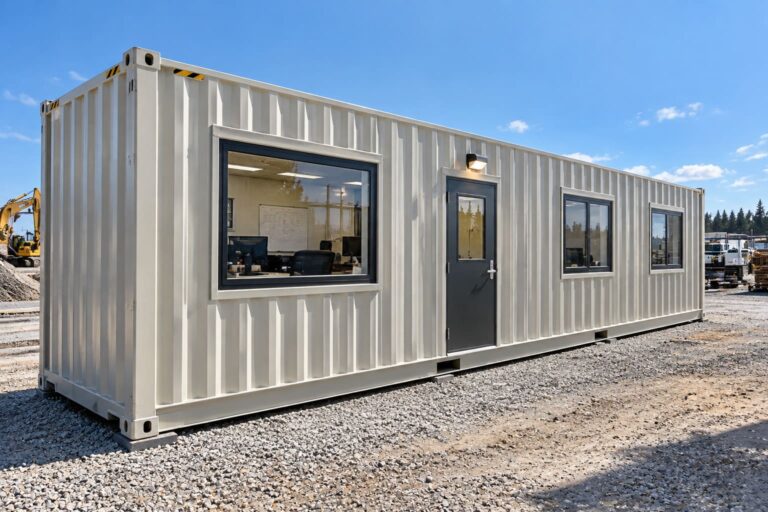
A container office gives the project team a dry, heated or cooled space for planning, meetings, paperwork, and communications. Typical fit-outs include insulation, lighting, outlets, desks, storage, a heater or heat pump, windows, and a mounting point for satellite internet or radio equipment.
Washroom containers can include toilets, sinks, showers, water heaters, and ventilation. Depending on the site, they may connect to holding tanks, septic systems, or composting and incinerating toilets. Having proper washroom facilities from day one makes a big difference to crew health, hygiene, and morale.
Sleeping containers can be fitted with beds or bunks, storage lockers, heating, lighting, and outlets. A 40ft container can be divided into private rooms for supervisors or shared bunk rooms for crews. Comfortable accommodation helps retain workers on long rotations.
A kitchen container with counters, sinks, cooking appliances, refrigeration, and storage keeps the crew fed without relying on outside services. Adjacent containers or a covered area between units can serve as a dining and common space.
Washers, dryers, and boot and glove dryers are essential on remote sites, especially in cold or wet climates.
A dedicated first aid container provides a clean, well-lit space with medical supplies, a treatment bed, and communications equipment.
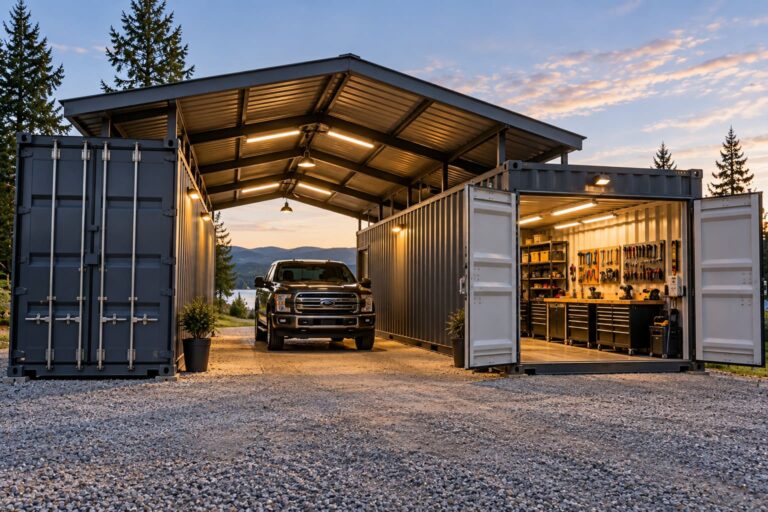
A workshop container with benches, tool storage, lighting, and power lets crews maintain equipment and fabricate parts on site. For setup ideas, see our guide on shipping container garages and workshops.
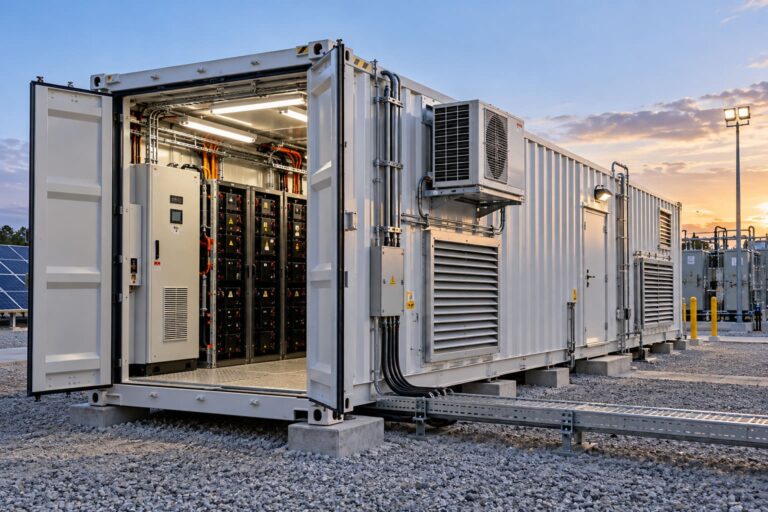
Generator housings, battery storage, water treatment systems, and electrical distribution can all be packaged in containers and shipped ready to connect. Our guide on shipping containers as technical infrastructure covers these applications in detail.
This is where containers become even more valuable for remote work. A container isn’t just a building. It’s also a shipping unit designed to carry cargo. That means the same containers that will become the office, washroom, and living quarters can also be loaded with the supplies the team needs before they leave the city.
Instead of sending the camp buildings in one shipment and the supplies in several more, everything can travel together. On sites with limited road access, seasonal ice roads, barges, or charter flights, combining shipments can save significant cost and reduce the risk of something important arriving late.
When the team arrives, they unload the supplies into their already-built facilities. Beds go into the sleeping quarters, food into the kitchen, files into the office, and tools into the workshop. There’s no camp to build first. Within hours rather than weeks, the crew can shift its focus to the actual project.
For larger projects, it often makes sense to include one or more standard storage containers dedicated to supplies and materials. These are packed with pallets, racks, and equipment, and once unloaded, they become secure on-site storage for the rest of the project. A cargo-worthy used 40ft container is a cost-effective choice for this role.
Because facilities arrive ready to use, crews can begin productive work almost immediately. On projects with short seasonal windows, that can mean weeks of additional working time.
Most of the construction labour happens in the city at normal rates instead of remote rates with travel, accommodation, and per diem costs added.
Facilities are tested before shipping, and missing parts are caught in the city where they can be replaced quickly.
Heated, insulated, well-built living quarters and washrooms make long rotations more comfortable, which helps with safety, morale, and keeping experienced workers on the job.
Steel containers can be locked at night and when the site is unattended, protecting equipment, supplies, and personal belongings from theft and wildlife.
Containers are built to withstand harsh marine environments and hold up well in snow, wind, rain, and heat.
When the project ends, the containers can be cleaned, repacked with equipment and waste for the return trip, and shipped to the next site. That reuse spreads the cost over several projects.
Start with the size of the crew, the length of the project, the climate, and what facilities are required. A small survey crew might need one office and one combined sleeping and washroom unit, while a large construction project might need a full camp of offices, dormitories, washrooms, a kitchen, and storage.
Use 20ft containers for compact units such as single washrooms, small offices, generator housings, and sites with limited access. Use 40ft or 40ft high cube containers for living quarters, kitchens, and larger offices where space and headroom matter. A new 40ft high cube container leaves comfortable headroom after insulation and ceiling finishes are installed. For a comparison of sizes, see our guide on 20ft vs. 40ft shipping containers.
For converted living quarters, washrooms, and offices, new one-trip containers provide straighter walls, intact coatings, and a clean interior that make the build faster and more durable. For supply and storage containers, cargo-worthy used units offer good value. Our guide on new vs. used shipping containers explains the differences.
Cold sites need thicker insulation, reliable heating, freeze-protected plumbing, cold-rated door seals, and snow load planning. Hot or humid sites need cooling, ventilation, reflective roofs, and condensation control. Our guide on building inside a shipping container covers insulation, framing, and utility options.
Decide how each container will get power, water, and waste service. Options include generators, solar and battery systems, water tanks, wells, treatment units, holding tanks, and septic systems. Design connection points during the build so hookups at the site are quick and simple.
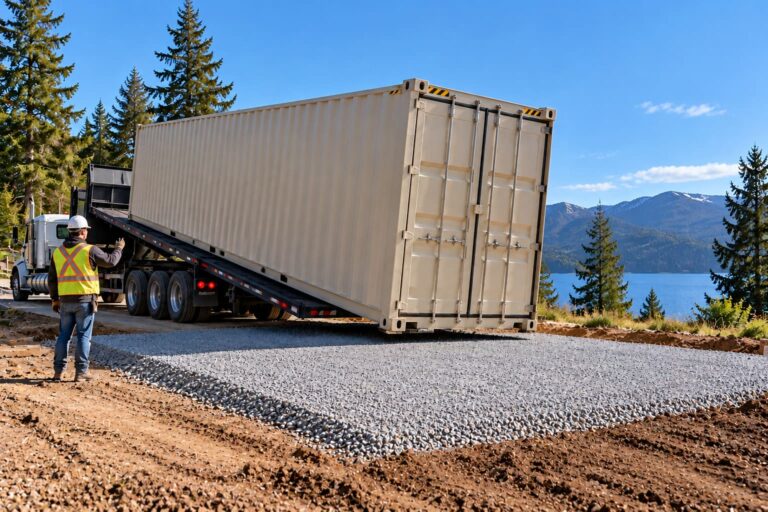
Containers need a firm, level base. Gravel pads, timbers, blocks, or helical piles are common for remote camps because they can be installed with minimal equipment. Our guide on the best foundations for shipping containers compares the options.
Confirm how the containers will reach the site: truck, rail, barge, ice road, or a combination. Check road and bridge weight limits, access for delivery trucks or cranes, seasonal road openings, and how the containers will be unloaded and positioned on arrival.
When loading supplies into a container that has already been built out, protect floors, walls, fixtures, and windows from damage during transport. Cover finished surfaces, pad sharp items, and avoid loading heavy cargo against interior walls or cabinets.
Containers move, tilt, and vibrate during trucking, rail, and barge transport. Strap, brace, and block all cargo so nothing shifts. Secure furniture and appliances to the floor or walls. Close and latch cabinets and doors.
Spread weight evenly along the length of the container and keep heavy items low. Stay within the container’s rated payload and within the weight limits of the trucks, roads, bridges, and lifting equipment along the route.
Fuel, propane, batteries, compressed gases, chemicals, and some cleaning products are regulated when transported. They may need special packaging, labelling, documentation, or separate shipping. Check transportation of dangerous goods requirements before packing them in a container.
Label each container and keep a detailed manifest of what’s inside. When the team arrives, they’ll know exactly where everything is and what to unload first. Load items needed on day one closest to the doors.
Containers can also carry equipment, unused materials, and waste back out when the project ends. Including return logistics in the plan from the start reduces the environmental footprint of the project and avoids leaving materials behind.
Remote camps may still be subject to building codes, electrical and plumbing codes, workplace health and safety rules for worker accommodation, environmental permits, and land use approvals. Requirements depend on the jurisdiction and whether the site is on private, public, or Indigenous land. Engage with the relevant authorities and landowners early, and design the containers to meet applicable codes before they leave the city, since corrections are much harder to make on site.
Reliable Containers supplies new and used 20ft, 40ft, and 40ft high cube containers to contractors, fabricators, and project teams preparing remote camps and facilities. We can deliver containers directly to your fabrication shop or yard so your build can begin right away. Get a quote for your project, or use our live rate tool to price containers delivered to your location.
Shipping containers are strong, weatherproof, secure, and designed to be transported by truck, rail, and barge. They can be built out into offices, washrooms, and living quarters in a city where trades and materials are available, then shipped to a remote site ready to use. This saves time, reduces on-site labour costs, and lets crews start working almost immediately.
Yes. Containers are designed to carry cargo, so they can be loaded with supplies such as bedding, food, tools, project materials, and spare parts before shipping. Protect finished interiors, secure all cargo, distribute weight evenly, and follow dangerous goods rules for items like fuel, batteries, and propane.
Common remote facilities include site offices, washrooms and shower units, sleeping quarters, kitchens, dining areas, laundry rooms, first aid rooms, workshops, storage rooms, generator housings, and water treatment units.
Because the containers arrive already built and tested, setup mainly involves placing them on prepared foundations and connecting power, water, and waste. Depending on the size of the camp and site conditions, that can take hours to a few days rather than the weeks required to build facilities on site.
New one-trip containers are generally best for living quarters, washrooms, kitchens, and offices because they offer a clean interior and straight walls for building. Cargo-worthy used containers are a cost-effective option for supply and storage containers.
Remote container camps are typically powered by diesel generators, solar panels with battery storage, or a hybrid system. Power systems can be packaged in their own containers and shipped ready to connect.
Yes. When a project ends, containers can be cleaned, repacked with equipment and materials, and shipped to the next site. Their reusability is one of the main reasons they’re so cost-effective for companies that run multiple remote projects.
Often, yes. Remote camps may need building, electrical, plumbing, environmental, and land use approvals, as well as compliance with workplace accommodation standards. Requirements vary by jurisdiction and land ownership, so check early and design the containers to meet code before shipping.