
30 Day Money Back Guarantee
Rated 5.0 on Google Reviews
Call Now +1 (866) 589-9392
Delivery Across North America 🚚
30 Day Money Back Guarantee
Rated 5.0 on Google Reviews
Call Now +1 (866) 589-9392
Delivery Across North America 🚚
Florida is one of the most active container markets in North America. The state’s two major port cities, Miami and Jacksonville, are among the busiest container ports on the continent, which means inventory availability is strong and delivery infrastructure is well established. For buyers across Florida, this translates to competitive pricing and relatively short lead times compared to inland or landlocked markets.
But buying a shipping container in Florida also comes with considerations that buyers in other states and provinces do not face to the same degree. The climate, the hurricane season, the coastal environment, and Florida’s specific county-level zoning rules all affect what you should look for, where you place your container, and how you maintain it over time.
This guide covers everything you need to know before buying a shipping container in Florida, from pricing and delivery to climate considerations and county regulations.
Florida’s position as a major port state creates a structural advantage for container buyers. Containers arrive at Port Miami and JAXPORT in Jacksonville constantly, and a percentage of that inventory enters the domestic sales market rather than returning to active shipping service. This steady supply keeps availability high and prices competitive relative to inland states where containers must be transported further from their point of entry.
Miami is the dominant entry point for containers arriving from Latin America and the Caribbean. Jacksonville handles significant cargo from the Atlantic shipping lanes. Both cities maintain container yards that service buyers across their respective regions of the state.
For buyers in central Florida, including the Orlando metro, Tampa Bay, and surrounding communities, delivery originates from whichever port yard is closest and most cost-effective for the specific delivery location. The relatively compact geography of Florida compared to larger states means that most buyers in the peninsula are within a reasonable delivery radius of at least one major depot.
Florida buyers benefit from strong port-side supply, which generally keeps prices competitive with or below the national average for comparable container grades. The following ranges reflect typical retail pricing in the Florida market in 2026 and include both 20ft and 40ft units in new and used condition.
| Container Type | Estimated Price Range (USD) |
|---|---|
| New 20ft Standard | $3,800 – $5,500 |
| New 40ft Standard | $5,500 – $7,800 |
| New 40ft High Cube | $6,000 – $8,500 |
| Container Type | Estimated Price Range (USD) |
|---|---|
| Used 20ft Standard | $2,200 – $3,500 |
| Used 40ft Standard | $3,000 – $4,500 |
| Used 40ft High Cube | $3,500 – $5,000 |
These figures represent unit prices before delivery. Delivery costs in Florida depend on your distance from the nearest depot and site access conditions, but are generally moderate given the density of available inventory across the state. Use the get a live rate tool to generate a current, delivery-inclusive price for your specific location before making a purchase decision.
Florida’s environment is unlike most other North American markets, and it affects container selection, placement, and maintenance in ways worth understanding before you buy.
Florida’s combination of high temperatures and persistent humidity creates interior conditions in an unmodified container that are more extreme than in cooler, drier climates. A sealed steel container in direct Florida sun can reach interior temperatures well above ambient air temperature during summer months. This is a significant consideration for buyers storing temperature-sensitive goods, electronics, finished products, or any materials that degrade under heat exposure.
Ventilation is the primary management tool. Adding louvered vents near the roofline creates airflow that reduces interior heat buildup and manages condensation. Insulation combined with a ventilation system or a small cooling unit can bring interior temperatures to acceptable levels for sensitive storage. For buyers who do not plan to modify the container, selecting storage contents that can tolerate Florida’s ambient temperature range is part of the planning process.
High humidity in Florida means that containers sealed during the cooler morning hours and then exposed to rising temperatures during the day experience significant internal condensation as moisture in the trapped air condenses on the cooler steel surfaces. This is sometimes called container rain, and it can affect stored goods even when the container’s exterior is fully weatherproof.
Managing this requires either ventilation that allows interior and exterior air temperatures to equalize, desiccant products placed inside the container to absorb ambient moisture, or a climate-controlled setup if the contents justify the investment. Buyers storing documents, sensitive equipment, or goods with moisture tolerances should address this before filling the container.
Properties within a few miles of the Florida coastline, including most of Miami-Dade County, much of the Gulf Coast, and barrier island communities, expose containers to salt-laden air that accelerates surface corrosion more rapidly than inland environments. Corten steel’s natural oxidation layer provides baseline protection, but containers in coastal locations benefit from periodic inspection and touch-up painting of any areas where the protective coating has worn through.
For coastal buyers, a new one-trip container with an intact factory coating is a better starting point than a used unit that has already accumulated surface wear. The intact paint on a new container provides a more complete initial barrier against salt air corrosion, reducing the maintenance required in the early years of ownership.
Florida’s hurricane season runs from June through November, and buyers placing containers permanently on their properties should think through wind load and anchoring. An empty or lightly loaded container is significantly lighter than a fully loaded one and can move under extreme wind conditions if not properly anchored.
In most residential and commercial applications, a container’s weight combined with basic ground anchoring is sufficient for all but the most severe storm conditions. For properties in high-risk zones, or for containers placed in exposed locations without wind breaks, anchor kits that attach to the corner castings and tie down to embedded ground anchors provide additional security. Consult with a local structural engineer or contractor if your property is in a designated high-wind zone and permanent container installation is planned.
Florida buyers span a wide range of use cases, and size selection should be driven by what you’re storing and where, not by what seems like the default choice.
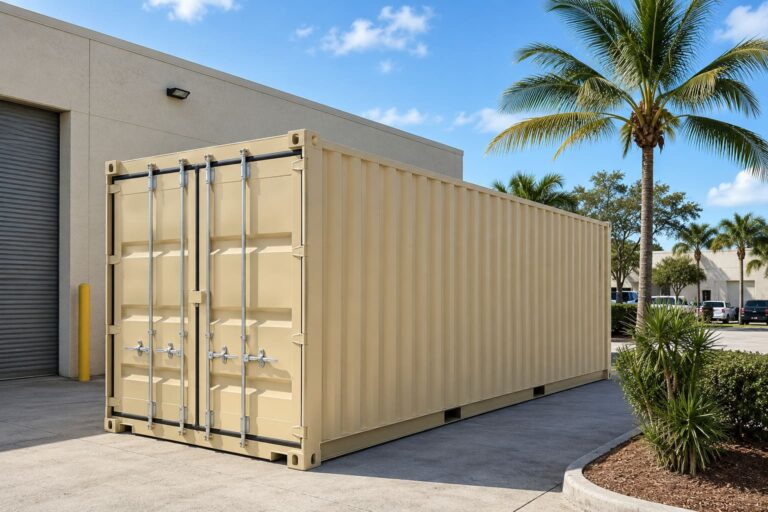
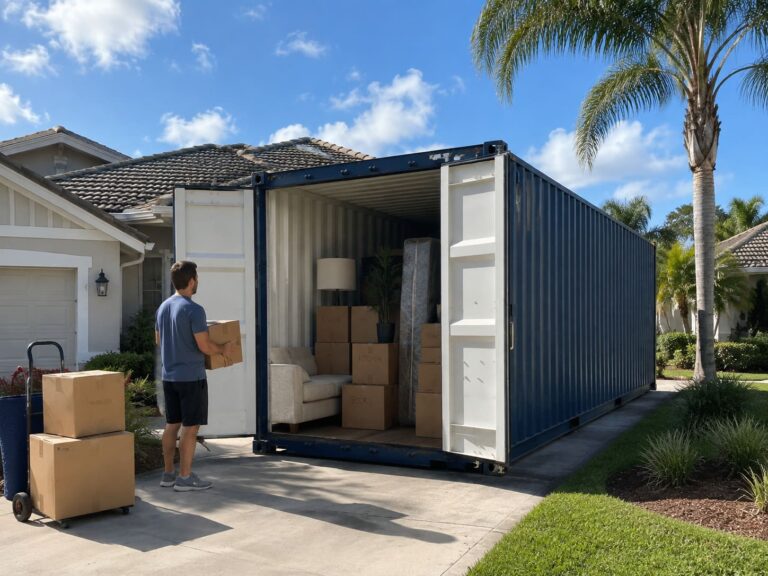
A 20ft container is the right choice for residential storage, small business applications, and buyers with site constraints or tight access. In Florida’s many gated communities, HOA-governed properties, and narrow residential lots, a 20ft container is easier to accommodate and less likely to create conflicts with property rules or neighbour visibility concerns.
For marine and boatyard applications along Florida’s extensive coastline, a 20ft container provides focused, secure storage for boating supplies, tackle, maintenance equipment, and seasonal gear without consuming a large portion of a limited waterfront lot.
Commercial and industrial buyers in Florida who need volume storage, long-item storage, or a container large enough to organize multiple categories of goods will find a 40ft container provides the capacity and layout flexibility they need.
A new 40ft container is particularly well suited to Florida buyers who are converting the unit into a workspace, retail structure, or customer-facing space, where the consistent interior condition and clean exterior of a one-trip unit make a practical difference. For pure storage applications where appearance and interior condition are less critical, a used 40ft container in cargo-worthy condition provides the same functional capacity at meaningfully lower cost.
Florida does not have a single statewide policy on shipping containers. Rules are set at the county and municipal level, and they vary considerably across the state’s 67 counties. This is one of the most important practical considerations for Florida buyers.
Many Florida counties restrict or prohibit shipping containers on residential properties, or permit them only with a permit and subject to screening or setback requirements. Miami-Dade, Broward, Palm Beach, and other densely populated counties tend to have more restrictive rules than rural inland counties. Some homeowners associations prohibit containers entirely regardless of what county code permits.
Before purchasing a container for use on a residential property in Florida, confirm both the applicable county zoning code and any HOA covenants that apply to your specific address. A container purchase cannot be reversed easily if placement is denied after delivery.
Commercial and industrial-zoned properties in Florida are generally more accommodating of container storage. Most counties allow containers on industrial land as a matter of course for working storage. Commercial zones vary by county, and some have aesthetic requirements that affect how containers must be screened or positioned relative to street frontage.
Florida’s significant agricultural sector, particularly in the interior of the state in areas like Polk, Highlands, and Okeechobee counties, provides a permissive environment for container placement on working farm land. Agricultural exemptions in Florida often extend to storage structures used in connection with active farming operations.
Florida’s geography stretches over 500 miles from Pensacola to Key West, and delivery logistics vary meaningfully by region.
South Florida buyers are closest to Port Miami and benefit from strong inventory availability and relatively short delivery lead times. Urban density in Miami-Dade and Broward counties means delivery truck access requires more planning than in suburban or rural areas. Confirm site access, overhead clearances, and any parking or street restrictions before scheduling delivery in dense urban neighbourhoods.
Central Florida buyers draw from both south and north Florida depots depending on specific location. The I-4 corridor between Orlando and Tampa is a high-demand area for container delivery with good infrastructure. Lead times are reasonable, and most suburban and commercial sites in this region present straightforward delivery conditions.
Jacksonville’s position as a major container port makes north Florida buyers well-positioned for availability and pricing. JAXPORT handles significant container volume, and inventory in the Jacksonville area is consistently available. North Florida and the Panhandle are served primarily from Jacksonville, with longer delivery legs to Pensacola and the western Panhandle.
Delivery to the Florida Keys and other remote or access-constrained properties requires advance coordination. Bridge weight limits, road width restrictions, and limited maneuvering room in some island communities affect what delivery is feasible. Confirm delivery capability for your specific location before placing an order if you are in the Keys or an otherwise unusual access situation.
Reliable Containers expanded into Florida with container yards established in both Miami and Jacksonville to serve buyers across the state directly. Details on that expansion are available in the Florida expansion announcement, which covers the new yard locations and what they mean for buyers across the state.
For buyers ready to move forward, the get a quote form is the best starting point for orders with specific requirements, multi-unit purchases, or delivery situations that benefit from a direct conversation before confirming.
It depends on your county and any applicable HOA rules. Florida does not have a uniform statewide policy on residential container placement. Some counties permit containers on residential land with no permit requirement; others prohibit them entirely or require permits, screening, and setback compliance. HOA covenants may be more restrictive than county code. Before purchasing a container for residential use in Florida, check both the county zoning ordinance for your address and any deed restrictions or HOA rules that apply to your property.
High humidity causes condensation inside containers when temperature differentials create moisture accumulation on interior steel surfaces. This is sometimes called container rain and can affect stored goods even when the container itself is structurally sound and weatherproof. Managing this in Florida requires ventilation to allow airflow and temperature equalization, desiccant products placed inside the container, or a climate-controlled setup for sensitive storage. Buyers storing documents, electronics, finished products, or moisture-sensitive materials should address this before using the container.
An empty or lightly loaded container is lighter than most buyers realize and can move under extreme wind loads if unsecured. For permanent or semi-permanent placements in Florida, particularly in coastal areas or high-wind zones, anchoring the container to the ground using anchor kits attached to the corner castings provides meaningful additional security. The appropriate anchoring method depends on your specific location, ground conditions, and the level of exposure to storm wind. Properties in designated high-wind zones should consult with a local structural professional before finalizing a permanent installation.
For coastal properties within a few miles of saltwater, a new container is generally the better starting point. The intact factory coating on a one-trip container provides a more complete initial barrier against salt air corrosion than a used container that has already accumulated surface wear. Over time, both new and used containers in coastal environments require periodic inspection and maintenance to manage surface corrosion. Starting with a new container reduces the maintenance burden in the early years of ownership, which can offset some of the higher upfront cost depending on your situation.
Delivery costs in Florida depend on your distance from the nearest container yard, site access conditions, and the specific delivery method required. For most buyers in the major population centres of south, central, and north Florida, delivery costs are moderate relative to the unit price. Buyers in remote locations, the Florida Keys, or properties with unusual access constraints should expect higher delivery costs and should discuss site specifics with the delivery team before confirming. A delivered price that includes freight to your postal code is the most reliable basis for budgeting.
Yes, and many Florida businesses do. Commercial and industrial properties in Florida generally accommodate container storage without significant regulatory barriers. Businesses in commercial zones should confirm applicable county requirements and any property management restrictions before placing a container. For businesses operating from leased premises, landlord consent may be required. A container used for working business storage is generally treated differently from a container being converted into an occupiable structure, which triggers building code and permitting requirements in most Florida counties.
All the standard inspection points apply: roof integrity, floor condition, door hardware and gaskets, corner post and rail soundness, and the light test for any through-wall perforations. In Florida specifically, pay additional attention to the base rails and underfloor cross-members for corrosion that may have been accelerated by high humidity exposure. Check the door gaskets carefully, as rubber degrades faster in heat and UV exposure than in cooler climates. If the container has been stored or used in a coastal area, inspect the exterior panels more carefully for salt-accelerated corrosion that may be more advanced than typical surface wear on a comparable used container from a drier, inland location.