
30 Day Money Back Guarantee
Rated 5.0 on Google Reviews
Call Now +1 (866) 589-9392
Delivery Across North America 🚚
30 Day Money Back Guarantee
Rated 5.0 on Google Reviews
Call Now +1 (866) 589-9392
Delivery Across North America 🚚
The craft beverage industry has embraced shipping containers in a way that goes well beyond storage. Across North America, independent breweries, craft distilleries, cideries, and meaderies are using containers to add taproom capacity, create outdoor bar experiences, store raw ingredients and finished product, and expand their footprint without the cost or timeline of conventional construction.
This guide covers the specific ways containers are being used across craft beverage operations, what each application requires in terms of container type and conversion, and what brewery and distillery owners need to think through before committing to a container project.
A few characteristics of craft beverage operations make them particularly well suited to container-based expansion.
First, breweries and distilleries typically operate from industrial or agricultural zoning, which is the most permissive category for container placement in most municipalities. The regulatory friction that residential or commercial-zone buyers encounter is less common in the industrial facilities where most production operations are housed.
Second, the aesthetic of craft beverage culture aligns naturally with the industrial character of shipping containers. A converted container taproom reads as intentional rather than improvised, which resonates with customers who associate the container format with independent, craft-oriented brands. Several of the most recognized craft taprooms in North America are container-based, and the format has developed genuine credibility within the industry.
Third, brewery and distillery properties often have the outdoor space, utility infrastructure, and existing industrial character to accommodate containers without significant site preparation. A container placed adjacent to a production building, connected to existing electrical and plumbing runs, expands usable customer or operational space without disrupting the core production facility.
Before exploring the more visible taproom and bar applications, it is worth covering how containers serve the operational storage needs of breweries and distilleries. For many operations, a storage container is the entry point before any conversion investment is considered.
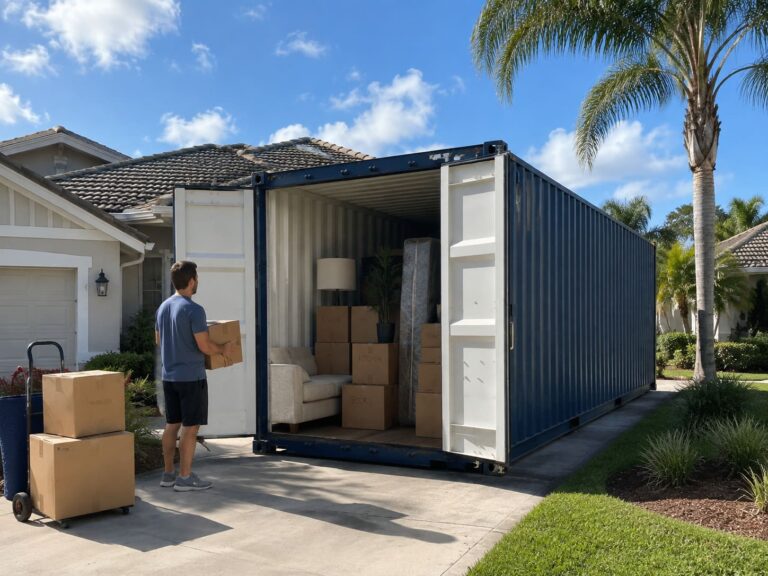
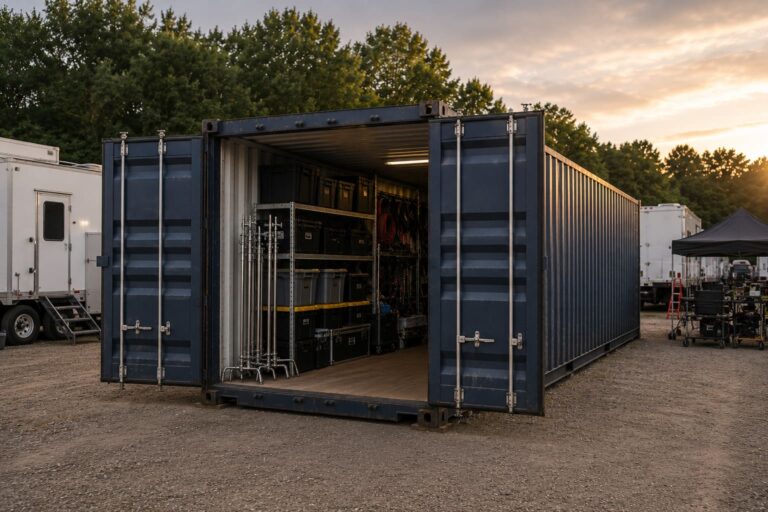
Breweries manage significant volumes of grain, hops, yeast, adjuncts, and packaging materials that require dry, pest-resistant, and organized storage separate from the production floor. A container positioned adjacent to the brew house keeps these materials accessible without crowding the production space and protects bulk grain and hop inventory from the moisture and temperature variation that can affect quality in unmanaged storage areas.
Temperature management matters for some ingredients. Hops, in particular, retain alpha acid content better when stored cool. A container used for hop storage in warmer climates may benefit from insulation and a small cooling unit to maintain appropriate temperatures, particularly through summer months.
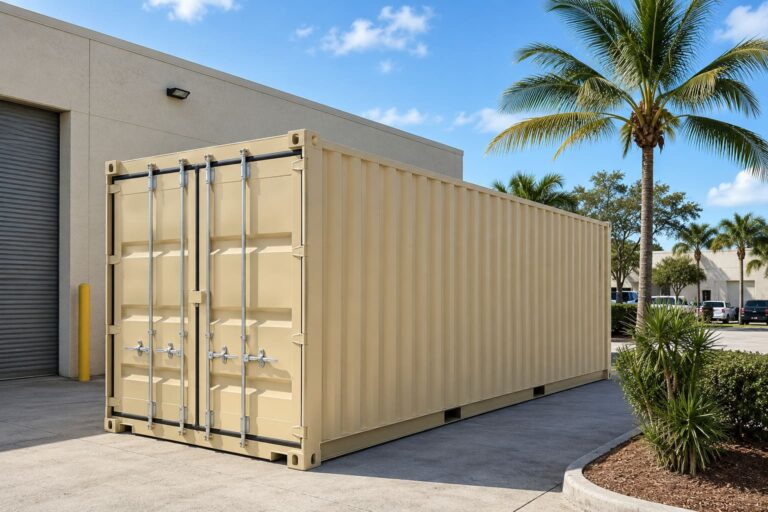
Cans, bottles, kegs, labels, boxes, and cleaning chemicals consume significant floor space in a production facility. Moving packaging inventory to a dedicated container frees up the production floor for equipment and active operations. A used 40ft container in cargo-worthy condition handles this application well at a lower cost than a new unit, as packaging storage is a functional application where interior cosmetics are not a priority.
Distilleries and barrel-aged beer programs require dedicated space for barrels that are often held for months or years. A container configured for barrel storage provides a controlled environment that is separate from the main production area and can be temperature-managed if the aging program requires it.
The standard interior height of a 40ft container limits how barrels can be stacked. A high cube variant provides approximately one additional foot of ceiling clearance, which can make a meaningful difference to how many barrel rows can be stacked safely depending on the barrel size being used.
Seasonal production spikes, large batch runs ahead of holidays, and the general inventory management demands of a growing beverage operation frequently push finished product beyond what the main facility can hold. A container positioned at the rear of the property serves as a bonded overflow warehouse that keeps product organized, secure, and separate from active production areas.
Bonded storage of finished alcohol products is subject to regulatory requirements in both Canada and the United States, and the specifics depend on the product type and jurisdiction. Confirm applicable requirements with your provincial or state alcohol regulator before using a container for finished product storage if regulatory compliance is relevant to your operation.
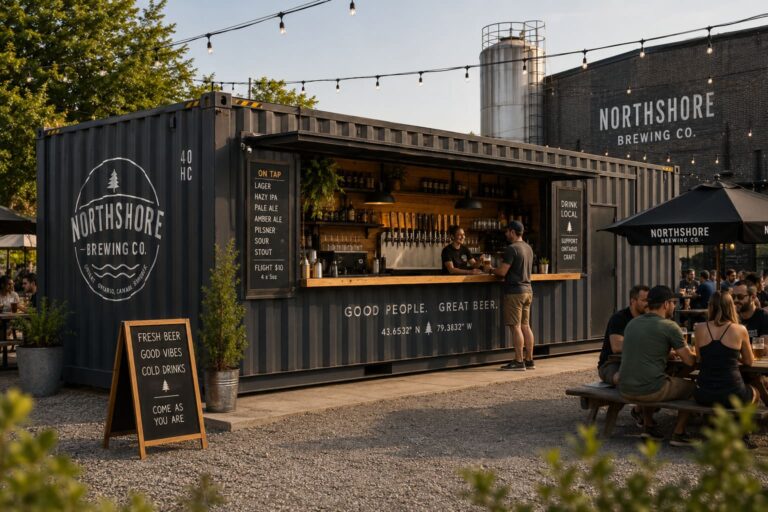
The container taproom has become one of the more distinctive formats in the craft beverage industry. Done well, it creates a customer experience that stands on its own as a design and brand statement rather than simply serving as an overflow seating area.
A fully converted container operated as a standalone taproom is the most ambitious single-container application. This format involves significant structural modification, including window openings or full glazed walls, a service bar built into the interior, tap system installation, electrical and plumbing work, and a full interior fit-out designed for customer use.
The 40ft high cube is the preferred format for this application. The additional ceiling height creates a more comfortable interior volume for customers, allows for pendant lighting and overhead design elements that contribute to the atmosphere, and provides enough floor space for a functional service bar alongside a small number of standing or seated positions inside the container itself.
A new 40ft high cube container gives conversion teams the cleanest possible starting point for this level of fit-out. A one-trip container arrives with intact floor condition, consistent wall surfaces, and no remediation requirements before conversion work begins, which simplifies the build process and produces a better finished result.
A more accessible approach is converting a container into a service bar positioned at the edge of an outdoor seating area. In this format, the container’s cargo doors or a purpose-cut service opening face the seating area, with the bar counter installed at the threshold. The interior of the container houses the draft system, refrigeration, and back-bar storage, while customers are served through the opening without entering the container.
This model is operationally simpler than a full walk-in taproom conversion. The container provides a weather-protected space for the draft system and perishables, the service opening creates a clear transaction point, and the outdoor seating area extends customer capacity beyond what the main taproom can accommodate. It is also typically easier to permit than a fully occupied container structure, as customers are not occupying the container itself.
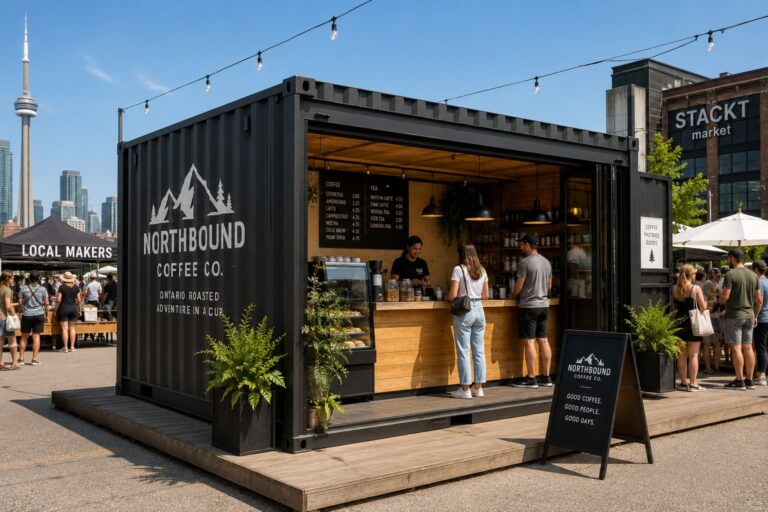
Breweries and distilleries that participate in festivals, farmers markets, food and beverage events, and community gatherings use container bars and taprooms as mobile units that travel to events and return to the home facility between appearances. The container format makes this possible in a way that a tent or portable bar setup does not, providing a consistent, branded environment regardless of where the operation is set up.
A 20ft container is the most practical size for a mobile taproom application. It provides enough interior volume for a service bar, tap system, and back-bar storage while remaining manageable for transport. The shorter length means it can be positioned at more venues, including those with tighter access or smaller vendor footprints, than a 40ft unit.
The conversion considerations for a mobile taproom overlap significantly with those discussed in the guide on shipping container pop-up shops and market stalls, which covers the practical and regulatory aspects of operating a container retail or service space in market and event settings.
For established breweries and distilleries that have outgrown their existing tasting room space but are not ready for a full facility expansion, a container positioned adjacent to the main building and connected via a covered walkway or pass-through opening provides a cost-effective way to add customer capacity.
The container becomes an extension of the existing tasting room experience rather than a standalone structure. Consistent design language between the main facility interior and the container fit-out, combined with a direct connection that allows customers to move between the two spaces, creates a cohesive experience that does not feel like an add-on.
The craft beverage context places specific demands on container design that differ from general retail or storage conversions. Getting these right determines whether the finished container reads as a deliberate brand asset or an afterthought.
A draft beer service container requires a glycol-cooled long draw system or a direct draw kegerator setup depending on how far the kegs are from the service taps. Long draw systems require a glycol chiller, trunk lines, and more detailed installation, but they allow kegs to be stored in a remote cooler or walk-in while taps are positioned at the service bar. Direct draw systems are simpler but limit keg placement to directly behind or below the taps.
For distillery operations serving cocktails or spirits flights, the tap system is replaced by a standard back bar setup with appropriate refrigeration for garnishes and perishables and secure storage for open bottles.
A container used as an occupied customer space requires adequate ventilation beyond what is needed for storage applications. CO2 from carbonated draft systems can accumulate in enclosed spaces, making ventilation not just a comfort issue but a safety consideration. Active ventilation systems rather than passive vents are the appropriate solution for occupied container taprooms, particularly in enclosed walk-in formats where customer occupancy reduces natural airflow.
A service bar requires a hand washing sink, a glass rinser, and drainage. Running plumbing to a container positioned outside the main facility involves connecting to the existing facility’s water supply and drainage system, which may require trenching depending on the distance and the configuration of the existing infrastructure. Factor plumbing work into the project scope and timeline before committing to a container bar configuration that depends on it.
The exterior of a brewery or distillery container is a brand surface that customers engage with before they interact with anyone inside. Custom paint in brand colours, the brewery or distillery name and logo, hop vine graphics, copper still illustrations, or simply a well-chosen single colour with restrained typography all work as approaches depending on the brand aesthetic.
Weathering steel left in its natural oxidized state is a surface treatment that some craft beverage brands use deliberately, as the warm rust tones suggest authenticity and age in a way that painted surfaces do not. This approach requires no painting but should be sealed or treated to prevent active rust transfer onto surrounding surfaces or clothing.
Operating a container taproom or bar involves a layer of regulatory complexity that goes beyond standard container placement permits. Alcohol service is regulated at the provincial or state level, and the physical space in which service occurs is typically subject to approval as part of the licensing process.
Most existing brewery and distillery licenses specify the approved area in which alcohol may be served. Adding a container taproom or bar to an existing licensed premises typically requires an amendment to the existing license to include the new service area. The approval process and timeline vary by jurisdiction. In most Canadian provinces and American states, this involves submitting a floor plan or site plan of the new service area along with the amendment application.
A container in which customers are served and occupy space is treated as a building in most jurisdictions, which means building code requirements for occupancy, fire safety, egress, and accessibility apply. The permit process for a container taproom addition is generally less complex than for a new permanent building, but it is not absent. Engaging a local architect or building permit consultant with experience in temporary and container structures can accelerate the approval process.
Food service operations attached to or incorporated within a container bar may trigger health department inspection requirements depending on whether food is being prepared or simply served. Confirm applicable requirements with local health authorities before finalizing the container configuration, as some layout decisions, such as the placement of hand washing facilities, are driven by health code requirements rather than operational preference.
The right starting point depends on whether your immediate need is operational storage, a customer-facing taproom addition, or a mobile service unit. Each has different container requirements, conversion timelines, and budget profiles.
For operations that want to discuss a specific project, the get a quote form is the most efficient way to outline your requirements and receive a response tailored to your situation rather than a generic price estimate.
Yes, provided the appropriate permits and licensing amendments are in place. A container taproom is treated as an extension of the licensed premises in most jurisdictions, which means the physical space needs to be approved by the relevant alcohol regulatory authority as part of the existing or amended license. Building permits for the container as an occupied structure also typically apply. The process is achievable and has been completed successfully by numerous craft beverage operations across North America, but it requires advance planning and engagement with the relevant authorities before construction begins.
A 40ft high cube container is the preferred format for a walk-in taproom conversion. The additional ceiling height creates a more comfortable customer environment and opens up design options that a standard-height container does not support as well. The floor area of a 40ft container provides enough space for a functional service bar and a small number of customer positions inside the container itself. For outdoor bar service where customers are served through an opening but do not occupy the container, a 20ft container is often sufficient and easier to position and permit.
Insulation is the foundation. Spray foam or rigid board insulation applied to the walls, ceiling, and door panels significantly reduces heat transfer through the steel shell. A small split air conditioning system then manages the remaining heat load from customers, equipment, and solar gain. For outdoor bar service containers where customers are served through an opening, shade structures, awnings, and fans provide supplemental cooling without full HVAC installation. Planning the climate management strategy before conversion begins ensures the right infrastructure is built in from the start.
Yes. A container configured as a mobile bar or taproom can be transported to events, festivals, markets, and partner venues using a standard tilt-bed or flatbed truck. The logistics involve disconnecting any utility connections, securing the interior for transport, and booking the delivery truck with adequate lead time. A 20ft container is the most practical size for mobile taproom use, as its shorter length allows access to a wider range of venue sites. Operating a mobile alcohol service unit at events also requires compliance with event permits and applicable liquor service regulations for each location.
A new one-trip container is the better choice for a taproom conversion where the finished space will be occupied by customers. The clean interior condition, intact floor, and consistent wall surfaces provide the best starting point for a quality fit-out. Surface remediation on a used container adds time and cost before conversion work can begin, and imperfections in the base material can affect the quality of the finished interior. For back-of-house storage applications such as packaging, ingredients, or barrel holding, a used cargo-worthy container performs identically at meaningfully lower cost.
In Canada, a container taproom typically requires a building permit from the local municipality, an amendment to the existing liquor license from the relevant provincial liquor authority, and potentially a health inspection if food service is involved. The specific requirements depend on the province and municipality. Ontario, British Columbia, Alberta, and Quebec each have their own liquor licensing frameworks and building code requirements that affect how a container taproom addition is permitted. Engaging a permit consultant or architect with relevant experience in your province can reduce the time and uncertainty involved in the approval process.
A container taproom conversion involves the container purchase, structural modifications including windows, door openings, and framing, electrical installation, plumbing if required, insulation and climate control, tap system and refrigeration, and the interior fit-out. Total project costs vary significantly based on the scale of the conversion and the level of finish targeted. A functional outdoor bar service container can be completed at a lower total cost than a fully fitted walk-in taproom with HVAC, plumbing, and commercial interior finishes. Getting detailed quotes from fabricators and trades experienced with container conversions alongside the container purchase cost is the most reliable way to develop an accurate project budget before committing.