
30 Day Money Back Guarantee
Rated 5.0 on Google Reviews
Call Now +1 (866) 589-9392
Delivery Across North America 🚚
30 Day Money Back Guarantee
Rated 5.0 on Google Reviews
Call Now +1 (866) 589-9392
Delivery Across North America 🚚
Size is one of the first decisions you’ll make when buying a shipping container, and it’s worth getting right before you commit. The wrong size doesn’t just affect your budget — it affects how the container fits on your property, how it gets delivered, and how well it serves your actual needs over time.
This guide covers the real differences between 20ft vs. 40ft shipping containers, including interior dimensions, weight, delivery considerations, and which use cases each size handles best.
The global container industry runs on a small number of standardized sizes. In North America, two lengths dominate the market: 20 feet and 40 feet. Both share the same exterior width and standard height, which makes them interchangeable across the same delivery equipment and site setups. The key differences come down to length, interior volume, and how each fits a given application.
A third option worth understanding is the high cube variant. Available in 40ft length, high cube containers add approximately one foot of interior ceiling height. This is covered in its own section below, as it applies to a specific set of buyers rather than everyone.
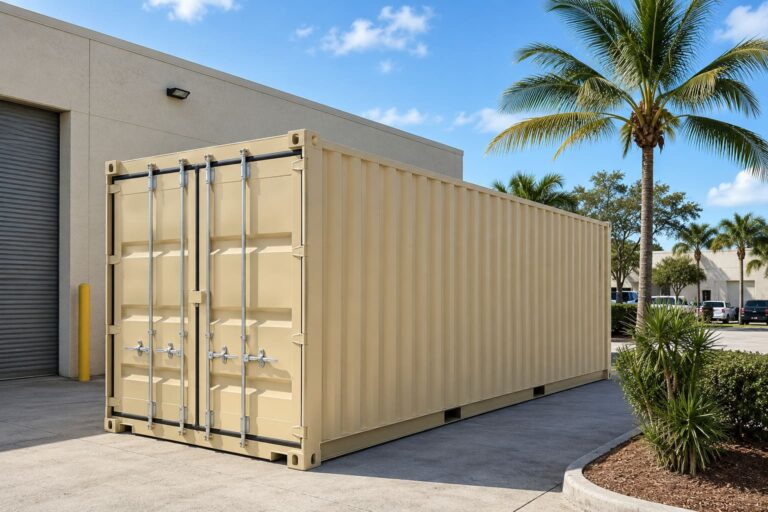
The 20ft container is the most common unit in global trade and one of the most practical sizes for buyers who need compact, efficient storage on a property with space constraints.
A 20ft container offers approximately 1,170 cubic feet of usable interior volume. The maximum payload capacity is roughly 25,000 kg, though for stationary storage applications, structural load limits are rarely a practical concern.
A standard 20ft container weighs approximately 2,200 to 2,400 kg empty. This is relevant for site preparation, as the ground surface needs to support both the container weight and the weight of whatever you store inside it.
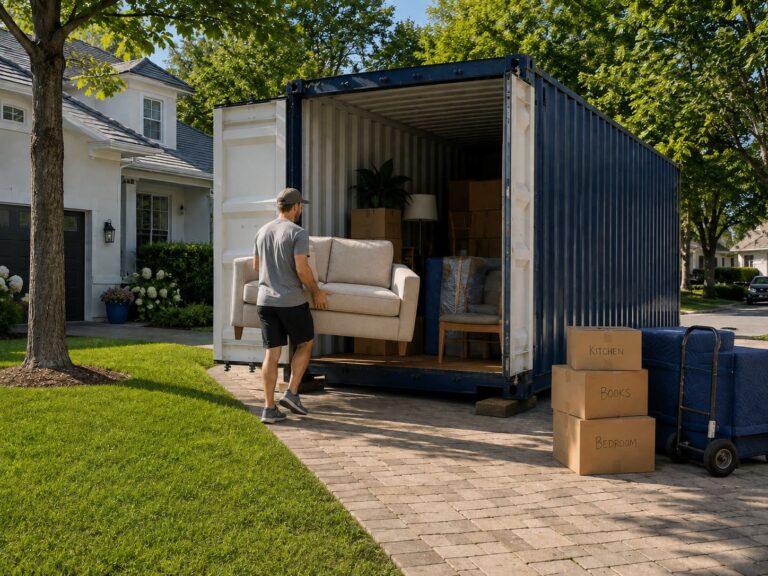
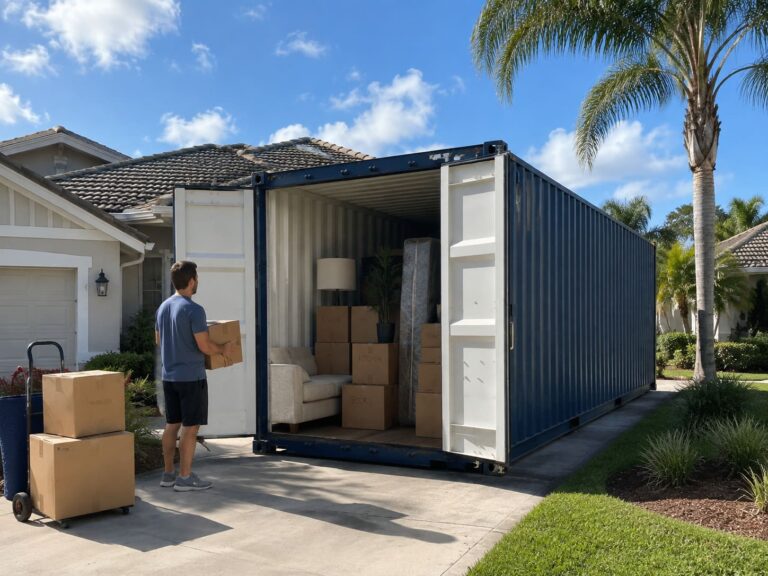
A 20ft container holds roughly the equivalent of a two-car garage in terms of floor space. Practically speaking, it can comfortably store:
The 40ft container doubles the floor length of a 20ft unit while sharing the same width and standard height. It’s the preferred choice for buyers who need high-volume storage, plan to store large or long items, or are building a conversion that requires substantial interior space.
A 40ft container offers approximately 2,390 cubic feet of usable interior volume, roughly double that of a 20ft unit. Payload capacity is around 27,000 to 28,000 kg, though again, stationary storage use rarely approaches structural limits.
A standard 40ft container weighs approximately 3,700 to 4,000 kg empty. Site preparation and ground bearing capacity should account for this higher base weight, particularly on soft soil or gravel surfaces.
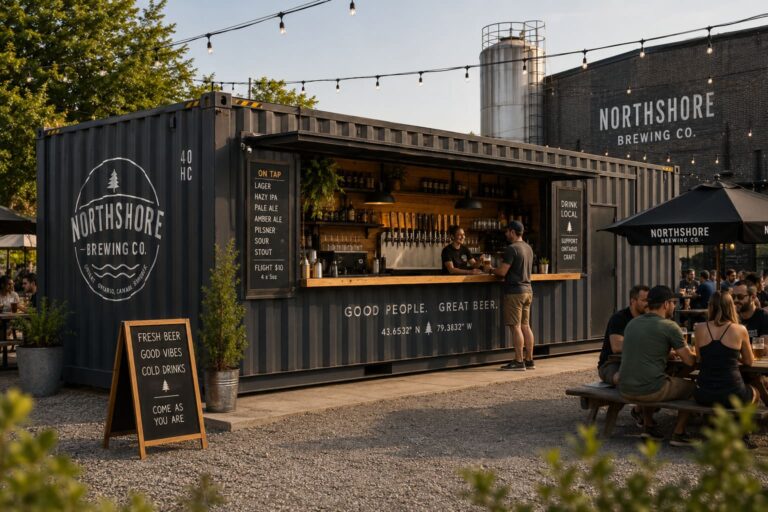
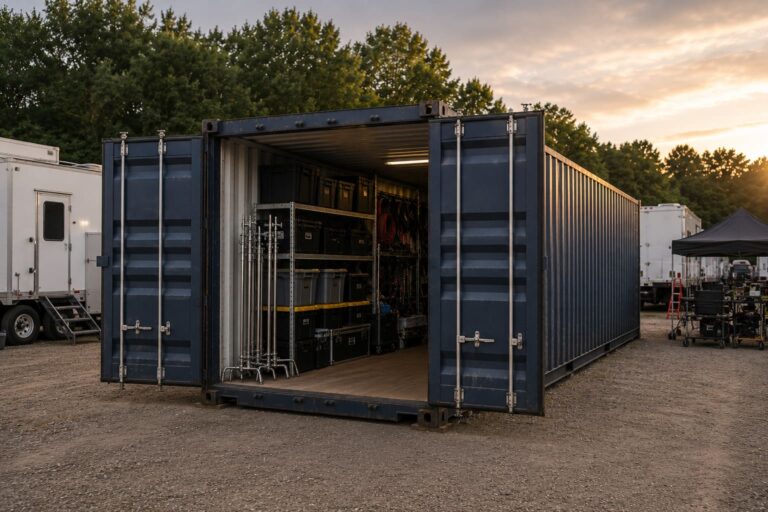
The 40ft container is the right choice when you need to store large quantities, long items, or multiple categories of goods that would require two 20ft units to accommodate. Common applications include:
A new 40ft container is particularly well suited to conversion builds and commercial applications where interior condition and floor quality are important from the start.
The high cube is not a separate size category so much as a variant of the 40ft container. Its exterior footprint is identical, but the container stands one foot taller at 9’6″ rather than 8’6″.
That extra foot makes a meaningful difference in specific situations. It is not a significant factor for most storage applications, where ceiling clearance is rarely a constraint. But for certain buyers, the high cube is the right choice and the standard height is not.
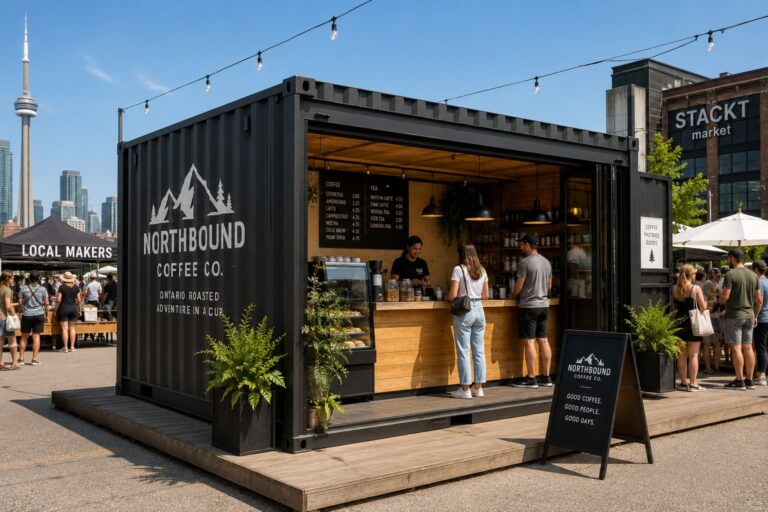
For conversions in particular, the new 40ft high cube container is worth the modest price premium over a standard 40ft. The added ceiling height transforms the feel of the interior space and removes the slightly cramped quality that standard-height conversions can carry.
| Feature | 20ft Standard | 40ft Standard | 40ft High Cube |
|---|---|---|---|
| Exterior Length | 20’0″ | 40’0″ | 40’0″ |
| Interior Length | 19’4″ | 39’5″ | 39’5″ |
| Interior Width | 7’8″ | 7’8″ | 7’8″ |
| Interior Height | 7’10” | 7’10” | 8’10” |
| Volume (approx.) | 1,170 cu ft | 2,390 cu ft | 2,694 cu ft |
| Empty Weight (approx.) | 2,200–2,400 kg | 3,700–4,000 kg | 3,900–4,200 kg |
| Best For | Compact storage, small sites, tight budgets | High-volume storage, long materials, conversions | Tall equipment, livable conversions, mezzanine builds |
Size affects more than interior storage capacity. It directly affects how your container gets delivered and what site access is required.
A 20ft container is delivered on a tilt-bed or flatbed truck. Because of the shorter length, the delivery truck requires less turning radius and can access tighter driveways and narrower gates. It can also be placed closer to obstacles like fences or structures because the shorter swing arc during tipping is easier to manage.
For properties with limited access, narrow lanes, or tight residential settings, a 20ft container is almost always the more practical option to deliver successfully.
A 40ft container requires a longer truck and trailer combination, which needs more turning space and a longer clear approach. Most standard residential driveways and commercial yards can accommodate 40ft delivery without issue, but unusual site configurations should be assessed before ordering.
Overhead clearance is also a consideration during tipping on a tilt-bed truck. Nearby power lines, tree branches, or roof overhangs need to be clear of the arc the container travels during offloading. Discuss your site layout with the delivery team before confirming your order if you have any concerns.
Both sizes require a firm, reasonably level surface to sit on. Gravel, compacted dirt, concrete, or railroad tie supports are common options. A 40ft container on soft or uneven ground is more susceptible to racking over time because of its longer span. Level placement matters more at 40ft than at 20ft.
A 40ft container costs more than a 20ft container, but it does not cost double the price despite offering double the floor space. The price gap is meaningful but not proportional to the volume difference, which makes the 40ft a strong value option when you genuinely need the space.
Delivery cost is generally similar between the two sizes for the same location, as freight pricing is driven more by distance than by container length. This means the cost-per-cubic-foot advantage of the 40ft becomes more pronounced once delivery is factored in.
If you’re deciding between buying two 20ft containers or one 40ft, a single 40ft unit is almost always the more cost-effective approach when the footprint works for your site. Two 20ft containers introduce a second delivery cost and two sets of door hardware to maintain.
A used 20ft container is the most accessible entry point for buyers working within a tighter budget, while a used 40ft container offers significantly more capacity at a price that remains well below the new equivalent.
Size and condition are separate decisions, but they interact in a few practical ways.
For 20ft containers used for functional storage, a cargo-worthy used unit is often the most cost-effective option. The size is compact enough that the interior rarely feels cramped even with some cosmetic wear.
For 40ft containers, the condition choice is more application-dependent. If you’re using the container purely for storage, a used unit in cargo-worthy condition handles the job well. If you’re converting the 40ft into a workspace, studio, or living space, a new container gives you a cleaner interior surface, better floor condition, and more consistent door sealing from the start.
Run through these questions to narrow your decision:
If you still have questions after working through the comparison, our frequently asked questions page covers many of the most common pre-purchase concerns in detail.
A 20ft container has an interior length of approximately 19’4″, while a 40ft container has an interior length of approximately 39’5″. Both share the same interior width of roughly 7’8″ and the same standard interior height of 7’10”. In terms of volume, a 40ft container offers approximately 2,390 cubic feet compared to 1,170 cubic feet in a 20ft unit, making it roughly double the usable space.
No. A 40ft container costs more than a 20ft, but not proportionally to the volume difference. You typically get significantly more space for a comparatively modest price increase, which makes the 40ft a strong value when you need the capacity. Delivery cost is also generally similar for both sizes to the same location, which further improves the cost-per-cubic-foot advantage of the 40ft option.
For most residential storage needs, a 20ft container is sufficient. It holds roughly the contents of a two-car garage and is easier to place on residential properties with limited access. If you’re storing the full contents of a large home, a 40ft container provides more comfortable capacity without the need to tightly pack and restack. If you have long items such as lumber, canoes, or large furniture, the 40ft is almost always the better fit regardless of total volume.
In most cases, yes. A 40ft delivery requires a tilt-bed or flatbed truck with adequate approach length and turning room. Most residential driveways and streets can accommodate this without issue. Properties with particularly narrow laneways, low overhead obstructions, or limited turning space may be better served by a 20ft unit. Discussing your specific site layout with the delivery team before ordering helps identify any access concerns in advance.
A standard 40ft container has an interior height of approximately 7’10”. A 40ft high cube adds one foot of exterior height, bringing the interior ceiling height to approximately 8’10”. The floor plan and length are identical. The high cube is particularly relevant for conversion projects, tall equipment storage, and applications where a mezzanine or elevated platform is planned inside the container.
It depends on how much interior space the finished build requires. A 20ft container works for single-room conversions such as a small home office, garden studio, or compact workshop. A 40ft container is better suited for multi-zone builds that include living, sleeping, kitchen, and bathroom areas, or any commercial conversion that needs meaningful interior floor space. For conversions where ceiling height matters, the 40ft high cube is worth the additional investment over a standard 40ft.
In most cases, a single 40ft container is the more practical and cost-effective solution when the footprint works for your site. Two 20ft containers introduce a second delivery cost, require more total ground space when placed side by side, and create a gap between the units that limits how you can use the space between them. Where two 20ft containers do make sense is when your site cannot accommodate a 40ft delivery, or when you want to place containers in two separate locations on the same property.