
30 Day Money Back Guarantee
Rated 5.0 on Google Reviews
Call Now +1 (866) 589-9392
Delivery Across North America 🚚
30 Day Money Back Guarantee
Rated 5.0 on Google Reviews
Call Now +1 (866) 589-9392
Delivery Across North America 🚚
The new vs. used shipping container question is one of the most common decisions buyers face, and it’s a reasonable one to spend time on. Both options are structurally sound, both are widely available, and both can serve the same range of applications. But they are not identical, and the right choice depends on what you’re actually using the container for.
This guide walks through the real differences between new and used containers so you can make a confident decision before you buy.
These terms have specific meanings in the shipping container world that don’t always match the general definition buyers expect.
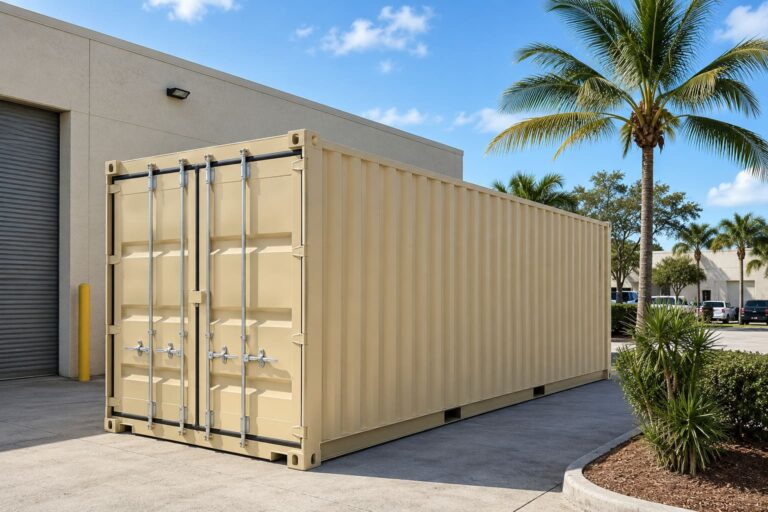
A new shipping container is more accurately called a “one-trip” container. It was manufactured at a factory, loaded with cargo, shipped once to its destination, offloaded, and then sold rather than returned to active service. These containers arrive in near-perfect condition because they’ve only experienced one loaded voyage.
True factory-new containers that have never carried cargo are rare in the North American market. When sellers use the word “new,” they almost always mean one-trip. The two terms are used interchangeably in the industry, and for most buyers, the distinction doesn’t matter because the condition is effectively the same.
A used container has completed multiple shipping cycles over its service life. Depending on how long it was in active use, a used container may show cosmetic wear such as surface rust, exterior dents, faded paint, and scuffed flooring. None of this wear necessarily affects structural performance.
What matters most with a used container is its grade. The condition grading system tells you what level of integrity the unit has been assessed at, which determines what it’s suitable for.
Used containers are assessed and sold under a few standard condition categories:
When buying a used container for storage or on-site use, cargo-worthy and wind-and-watertight are the two most relevant grades. Understanding which grade you’re purchasing matters more than whether the container looks cosmetically perfect.
New containers carry a higher price tag, and that premium reflects real, tangible differences in condition. Whether those differences matter to your project is the question worth examining.
One-trip containers arrive with consistent paint, clean exterior panels, and minimal denting. If visual uniformity matters for your application, whether that’s a customer-facing pop-up space, a converted office, or a container placed prominently on a residential property, a new unit eliminates the variable of not knowing exactly what you’ll receive cosmetically.
The interior of a new container is clean and dry, with flooring that shows virtually no wear. Bamboo or hardwood container flooring that has never been heavily loaded retains its original surface integrity, which is relevant for conversion projects where the floor becomes a finished living or working surface.
New containers also tend to have tighter door seals from the outset, which supports better moisture management without needing early seal replacement.
Because a new container has only completed one loaded voyage, the corner castings, rails, cross-members, and roof panels are in their best possible condition. This is particularly relevant for buyers planning significant structural modifications: adding roll-up doors, cutting window openings, or joining multiple units. Starting with a structurally fresh unit reduces the variables involved.
Browse our new containers for sale to see available sizes and current inventory.
Used containers have a reputation for being the budget option, but that framing undersells their practical value. For the majority of storage and on-site applications, a quality used container performs identically to a new one at a meaningfully lower cost.
Used containers typically cost 30 to 50 percent less than comparable new units. On a 20ft container, that gap can represent over a thousand dollars. On a 40ft unit, the savings can be even more significant. For buyers whose application is functional rather than aesthetic, this difference is difficult to justify paying.
This is the most important distinction to understand when evaluating a used container. Cosmetic wear on the exterior, including surface rust, paint variation, and minor panel dents, is normal and expected. It does not indicate a failing container.
What matters is whether the structural components are sound. The floor framing, corner posts, roof bows, and door hardware are what determine whether a container is safe to use and worth purchasing. A cargo-worthy used container has been assessed against these standards. Surface rust on the exterior panels is not the same as structural deterioration.
Used containers are generally more widely available than new units, particularly in inland markets and smaller cities. If your timeline is tight, a used container in cargo-worthy condition may be the faster option to source and deliver.
Our used containers for sale include 20ft and 40ft options in cargo-worthy condition, inspected before delivery.
Whether you’re purchasing a one-trip or a used unit, knowing what to look for helps you receive a container that performs as expected.
Container floors are typically made from hardwood or bamboo over a steel subfloor. On used containers, check for soft spots, rot, or signs of water intrusion that have affected the wood over time. The steel cross-members beneath the floor should show no signs of severe corrosion or deformation.
Doors should open and close smoothly without excessive force. Hinges should be intact with no cracks or significant corrosion at the weld points. Rubber door gaskets should compress evenly and create a proper seal when the doors are closed. Worn seals are a common repair item on older used containers, but it’s a simple fix when caught early.
The roof is the most vulnerable surface for water intrusion. Look for dents that have created low points where water pools rather than drains. Hairline cracks or separations at welded seams should be assessed carefully. On the exterior panels, distinguish between surface rust, which is normal, and rust that has eaten through the steel wall, which is not acceptable.
Reliable Containers backs its inventory with a quality guarantee so buyers have confidence in what they’re receiving, whether they choose a new or a used unit. Our containers are inspected before dispatch, and condition is accurately represented at the time of sale.
Both new and used containers are built to last for decades under normal conditions. ISO shipping containers are engineered to stack under full load in ocean environments, which means stationary land-based use is comparatively low-stress on the structure.
A new container may require less maintenance over its first several years. A cargo-worthy used container, kept painted and with seals replaced when needed, can easily reach the same functional lifespan. The total cost of ownership over ten or twenty years is often comparable between the two.
Where new containers hold a longer-term advantage is in conversion projects, where the quality of the starting material affects the quality of the finished build. For pure storage, the advantage narrows considerably.
A few beliefs circulate in this category that are worth addressing directly.
This is not accurate. A container graded cargo-worthy has been assessed against a recognized standard. The grade exists precisely because containers in active use need to be reliable. Surface wear and structural integrity are different things, and a WWT or cargo-worthy used container is not a failing unit.
One-trip containers arrive in excellent condition, but they are not immune to minor imperfections. A small weld mark, a surface scuff from loading, or a minor cosmetic variation can appear on new units. The condition is consistently better than a used container, but buyers should review their specific unit rather than assuming perfection sight unseen.
For functional storage, used is usually the more cost-effective choice. But for conversion projects, the additional cost of a new container may be worthwhile when factoring in the condition of the floor, the cleanliness of the interior, and the reduced likelihood of needing early repairs or surface treatment. The right decision depends on what you’re building.
Work through these questions before committing:
There is no universally correct answer between new and used. Both are legitimate choices, and both categories include quality options that will hold up under regular use.
The primary difference is condition and price. New (one-trip) containers have completed a single cargo voyage and arrive in near-perfect condition, while used containers have been in active shipping service and show varying degrees of cosmetic wear. Both are structurally engineered to the same ISO standard; the difference lies in how much service they have already accumulated and what surface condition you receive as a result.
Yes, provided it carries an appropriate condition grade. A cargo-worthy used container has been formally assessed as structurally sound. A wind-and-watertight container keeps out the elements reliably for stationary storage applications. The key is to confirm the grade before purchasing and to inspect the floor, doors, and roof for any specific condition concerns. Surface rust alone does not indicate an unsafe container.
Used containers typically cost 30 to 50 percent less than a comparable new unit. The exact gap depends on the size, grade, and regional market conditions at the time of purchase. For a 20ft container, this can represent a savings of over a thousand dollars. For a 40ft unit, the difference is often larger. Delivery cost remains the same regardless of whether the container is new or used, so the savings are realized on the unit price itself.
Yes, and many people do. However, the starting condition of the container matters more in a conversion than in a pure storage application. Used containers may have floor wear, residual odours from prior cargo, or exterior rust that requires treatment before interior work begins. A new container eliminates most of these variables and provides a cleaner foundation for insulation, electrical work, and interior finishing. For complex conversions, the additional upfront cost of a new unit is often worth considering.
A properly graded used container should not leak under normal conditions. Wind-and-watertight and cargo-worthy grades indicate that the container passes basic weatherproofing standards. That said, door seals degrade over time and may need replacement on older units. Roof dents that create pooling points can eventually lead to small rust perforations. Inspecting the seals and roof carefully before purchase, and maintaining them over time, prevents the majority of water intrusion issues.
A one-trip container is a new container that has completed a single voyage from the factory. It is the closest thing available to a brand-new unit in the North American market. Whether it’s worth the premium depends entirely on your application. For functional storage, the price difference is hard to justify. For conversion projects, high-visibility installations, or applications where interior cleanliness matters, the consistent condition of a one-trip container provides real value that justifies the additional cost.
Ask your seller to confirm the condition grade and what it covers. Cargo-worthy containers have been formally assessed against recognized standards. At Reliable Containers, our used inventory is inspected before delivery and condition is accurately represented at the time of sale. If you have specific concerns about a unit, raise them before purchase so they can be addressed or clarified before the container is dispatched.