
30 Day Money Back Guarantee
Rated 5.0 on Google Reviews
Call Now +1 (866) 589-9392
Delivery Across North America 🚚
30 Day Money Back Guarantee
Rated 5.0 on Google Reviews
Call Now +1 (866) 589-9392
Delivery Across North America 🚚
Most people think of shipping containers as storage. But across industries like energy, mining, utilities, construction, and telecommunications, containers are quietly doing far more demanding work. They house electrical switchgear, pumping equipment, battery systems, generators, control rooms, and fuel management systems, often in places where building a conventional structure would be slow, expensive, or simply impractical.
This guide covers how shipping containers are converted into technical infrastructure, the most common applications, what modifications are involved, and why engineers and project managers increasingly choose a container over a purpose-built enclosure.
A technical enclosure has a simple job: protect sensitive, expensive equipment from weather, impact, tampering, and temperature extremes while giving technicians safe access to operate and maintain it. ISO shipping containers happen to be very good at that job, for several reasons.
Containers are engineered to survive years of ocean transport, stacking under heavy loads, salt spray, and rough handling at ports. Their steel frame, corner posts, and corrugated walls provide a strong, weather-resistant shell before any modification begins. That durability carries over directly to equipment housing on industrial sites, remote properties, and exposed outdoor locations.
One of the biggest advantages is that the entire unit can be built, wired, plumbed, and tested in a controlled shop environment before it ever reaches the project site. Instead of sending trades to a remote or active site for weeks, the equipment arrives as a complete, commissioned package that only needs to be placed, connected, and started up. This shortens on-site schedules, reduces labour costs in difficult locations, and lowers the risk of weather delays.
Because containers follow international dimensional standards, a finished technical unit can move by truck, rail, or ship using standard equipment and corner castings for lifting and securing. Getting a fully outfitted enclosure to a remote mine, a wind farm, or a construction site is far simpler than shipping and assembling a custom building.
Electrical gear, batteries, controls, and pumps are valuable and, in some cases, dangerous if accessed by unauthorized people. A steel container with lockable doors, reinforced access points, and optional alarm systems is far harder to break into than a fenced pad or lightweight shed.
Many technical installations are temporary or tied to a project timeline. When a job ends, a container-based unit can be disconnected, lifted, and moved to the next site. That reuse potential improves the return on investment compared to a permanent building that stays behind.
Depending on the jurisdiction and application, a containerized equipment enclosure may be treated differently from a permanent occupied building, which can simplify or speed up approvals. Requirements vary widely, so always confirm with the authority having jurisdiction, but many project teams find container-based equipment rooms easier to permit than site-built structures.
The range of technical uses for containers is broad. These are among the most common.
Containerized electrical rooms house switchgear, transformers, distribution panels, motor control centres, and metering equipment. They’re used on construction sites, industrial facilities, temporary power installations, and remote camps where a stable, protected electrical hub is needed. A container electrical room can be built to connect the grid to a backup generator, distribute power across a large site, or provide temporary service during a facility upgrade.
Generators housed in containers are protected from weather and theft, and the enclosure can be fitted with sound attenuation, fuel tanks, exhaust systems, and ventilation louvres. Containerized power units are common for remote operations, events, emergency backup, and construction sites without grid access.
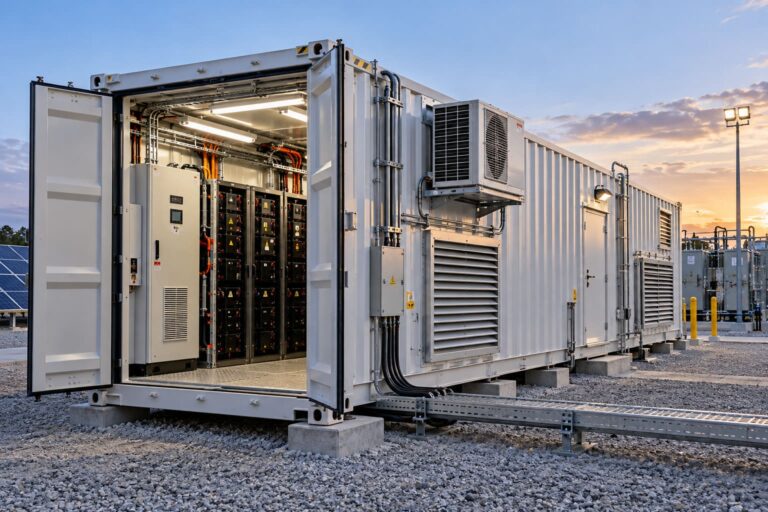
Battery energy storage is one of the fastest-growing uses for containers. Battery racks, inverters, thermal management, and fire suppression systems are installed inside a container to create a self-contained energy storage unit. These systems support solar and wind projects, provide backup power, reduce peak demand charges for commercial facilities, and support EV charging infrastructure where grid capacity is limited.
Containerized pump stations house pumps, piping, valves, controls, and monitoring systems for water supply, dewatering, wastewater, irrigation, and industrial process applications. They’re especially valuable on mine sites, construction dewatering projects, and municipal or agricultural water systems where a pump station needs to be installed quickly or relocated later.
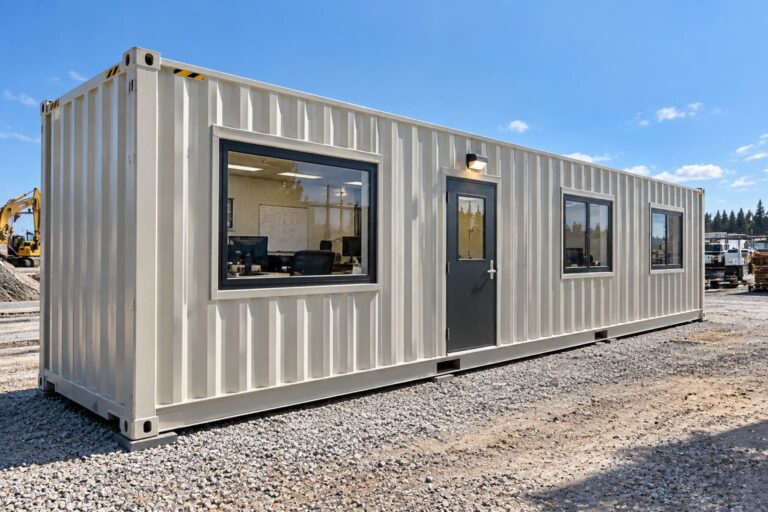
Containers converted into control rooms house computers, SCADA interfaces, PLC panels, and monitoring equipment for industrial processes, utilities, and remote facilities. With insulation, climate control, lighting, and workstations, they provide a comfortable, protected environment for operators and technicians.
Telecom equipment, network hardware, and small-scale server installations need clean, climate-controlled, secure housing. Containers fitted with HVAC, cable entry ports, raised floors or cable trays, and backup power are used as equipment shelters for communications sites, remote network nodes, and edge computing installations.
Fuel pumps, metering, filtration, and dispensing controls can be housed in a container with appropriate ventilation, gas detection, spill containment, and fire-rated separation. These units serve fleet yards, construction sites, mining operations, and remote facilities that need controlled, secure fuel handling.
Boilers, compressors, water treatment systems, HVAC plants, and other mechanical equipment can be packaged in a container to serve a building, a process, or a temporary installation. Prefabricated mechanical rooms are especially useful when space inside an existing facility is limited or when equipment needs to be added quickly.
Mobile labs for water testing, environmental monitoring, materials testing, and quality control are often built inside containers so they can be deployed directly to the site where samples are collected.
A technical container is far more than a box with equipment inside. Converting a container into a reliable equipment enclosure typically involves several layers of engineering and fabrication.
Doors, louvres, cable entries, pipe penetrations, and equipment access openings are cut into the walls, roof, or floor. Because the corrugated walls contribute to the container’s strength, any significant opening should be framed with steel reinforcement to maintain structural integrity. Heavy equipment may also require reinforced floors, internal skids, or mounting frames.
Some units include overhead monorails or hoist beams so heavy components such as pumps, motors, or battery modules can be removed and replaced without dismantling the enclosure. External lifting points and forklift pockets may also be added depending on how the unit will be handled.
Equipment and technicians both perform better in a controlled environment. Spray foam, rigid board, or mineral wool insulation is applied to the walls, ceiling, and sometimes floor. Spray foam is popular for technical containers because it also seals air gaps and limits condensation on the steel. Mineral wool is often specified where fire resistance is a priority.
Electrical equipment, batteries, and electronics generate heat and have strict operating temperature ranges. Technical containers are fitted with air conditioning, heating, ventilation fans, or industrial HVAC units sized to the equipment’s heat load and the site’s climate. For units in extreme cold or heat, thermal design is one of the most important engineering decisions in the project.
A single container can be divided into separate zones, for example an electrical room on one end and a mechanical or battery room on the other. Partitions may be fire-rated or sealed to separate hazards, control airflow, or meet code requirements for specific equipment types.
Lighting, receptacles, distribution panels, grounding, cable trays, conduit, and control wiring are installed during fabrication. Many technical containers also include fibre optic connections, remote monitoring, and integration with SCADA or building management systems so the equipment can be operated and monitored off-site.
Depending on the application, technical containers may include smoke and heat detection, gas detection, fire suppression, emergency lighting, explosion relief panels, eyewash stations, and spill containment. Battery and fuel applications in particular have stringent safety requirements that drive the design.
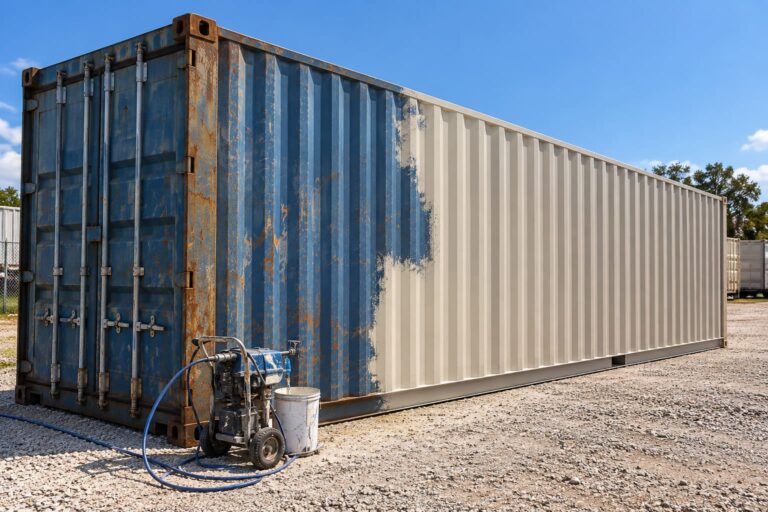
An industrial coating system protects the container against corrosion over a long service life, particularly in coastal, chemical, or harsh weather environments. Colour choice can also help manage solar heat gain. For more on coatings, see our guide on painting a used shipping container.
Technical containers are often deployed where conditions are hardest, from northern mine sites with deep winter cold to hot, humid coastal environments. The climate drives several design decisions.
A 20ft container suits compact equipment packages such as a single generator, a small electrical room, a pump skid, or a telecom shelter. It’s easier to transport to tight or remote sites and to place with smaller lifting equipment.
A 40ft container provides room for larger switchgear lineups, multi-compartment designs, battery systems with service aisles, or combined electrical and mechanical rooms. For a detailed size comparison, see our guide on 20ft vs. 40ft shipping containers.
High cube containers add about a foot of interior height. In technical builds, that extra height matters: it leaves room for overhead cable trays, ductwork, lighting, lifting monorails, and insulation while still giving technicians comfortable headroom. A new 40ft high cube container is a common starting point for electrical rooms, BESS units, and control rooms.
For most technical infrastructure, a new one-trip container is the better foundation. It offers a clean, straight structure with no prior cargo residue, intact coatings, and sound flooring, all of which simplify fabrication and support a long service life for expensive equipment. A new 20ft container or new 40ft container is typically specified for permanent or high-value installations.
A cargo-worthy used container can still be a cost-effective choice for simpler or shorter-term applications such as tool and parts storage on a project site, temporary generator housing, or a basic equipment shelter. Our guide on new vs. used shipping containers covers the tradeoffs in detail, and every container we sell is backed by our quality guarantee.
Even when a container isn’t housing the core technical equipment, it often plays a supporting role on infrastructure and industrial projects:
A successful technical container project usually follows a clear sequence:
Reliable Containers supplies the container shells that fabricators, engineering firms, and contractors build into technical infrastructure. Whether you need a single high cube unit for an electrical room or multiple containers for a larger project, get a quote or use our live rate tool to price a container delivered to your site or fabrication shop.
Yes. Containerized electrical rooms are widely used on construction sites, industrial facilities, remote camps, and energy projects. They typically include insulation, HVAC, lighting, grounding, cable entries, and safety systems, and they’re built and tested off-site before delivery. Electrical design and installation must meet applicable electrical codes and be completed by qualified professionals.
A containerized battery energy storage system, or BESS, is a container fitted with battery racks, inverters, thermal management, monitoring, and fire protection systems. It stores electricity for later use, supporting renewable energy projects, backup power, peak demand reduction, and EV charging infrastructure. Containers are popular for BESS because they’re standardized, transportable, and easy to scale by adding more units.
High cube containers provide about one extra foot of interior height compared to standard containers. In a technical enclosure, that space accommodates overhead cable trays, ductwork, lighting, lifting rails, and insulation while preserving comfortable headroom for technicians working inside.
For permanent installations or expensive equipment, a new one-trip container is usually the better choice. It provides a clean, straight structure with intact coatings and sound flooring, which simplifies fabrication and supports a longer service life. A cargo-worthy used container can work well for simpler, temporary, or lower-value applications such as spare parts storage or basic equipment shelters.
Technical containers are insulated and fitted with HVAC systems sized to the equipment’s heat output and the site’s climate. In cold climates, heaters and thicker insulation keep equipment within its operating range. In hot climates, air conditioning, ventilation, reflective coatings, and dehumidification protect electronics and batteries.
Often, yes, though requirements vary by location and application. Electrical installations, fuel systems, battery storage, and occupied control rooms are commonly subject to electrical, fire, building, or environmental codes. Confirm requirements with the local authority having jurisdiction early in the planning process.
Yes, that’s one of their main advantages. Once equipment is safely disconnected and secured, the unit can be lifted using its corner castings and transported by truck, rail, or ship to a new location, then reconnected and recommissioned.
Yes. We supply new and used 20ft, 40ft, and 40ft high cube containers to engineering firms, fabricators, contractors, and end users building technical infrastructure. Containers can be delivered directly to your fabrication shop or project site. Contact our team for a quote based on your size, condition, and delivery requirements.