
30 Day Money Back Guarantee
Rated 5.0 on Google Reviews
Call Now +1 (866) 589-9392
Delivery Across North America 🚚
30 Day Money Back Guarantee
Rated 5.0 on Google Reviews
Call Now +1 (866) 589-9392
Delivery Across North America 🚚
Construction companies rely on heavy equipment, specialized tools, and high value attachments to complete projects safely and efficiently. Excavators, skid steers, trenchers, compact loaders, and snow removal equipment represent major investments. Without secure storage, these assets are exposed to theft, vandalism, and harsh weather conditions.
Shipping containers provide a secure, weather resistant, and scalable solution for construction equipment storage. Originally built to cross oceans, these steel units are designed to handle extreme environments. On construction sites, they now protect tools, attachments, fuel equipment, and job site materials.
This guide explains how contractors use shipping containers for equipment storage, why they outperform many traditional options, and how they support growing operations.
Construction equipment storage refers to the secure protection of machinery, tools, and job site materials when not in use. This includes overnight storage, seasonal storage, and long term protection between projects.
Equipment storage must address three main risks. Theft. Weather exposure. Operational downtime.
Unprotected equipment increases liability and replacement costs. Proper storage extends equipment lifespan and reduces unexpected expenses.
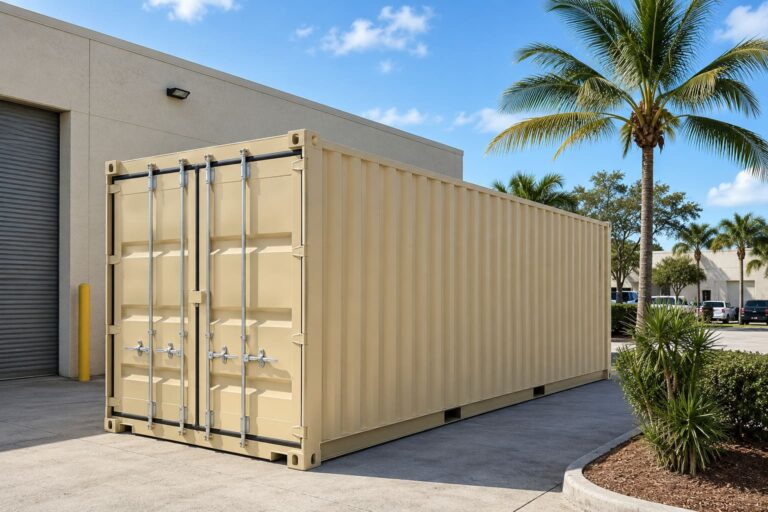
Shipping containers are built from corten steel. They are engineered to withstand heavy loads, rough handling, and constant outdoor exposure.
This durability makes them ideal for construction sites. They require minimal preparation and can be delivered directly to active projects.
Construction sites are common targets for theft. Tools and attachments can disappear overnight.
Steel container walls and reinforced locking systems provide strong physical protection. Many contractors upgrade to heavy duty lock boxes for additional security.
Rain, snow, and temperature swings damage tools and equipment components. Electrical systems and hydraulic parts are especially vulnerable.
Shipping containers are wind and watertight when properly maintained. This protects valuable gear from corrosion and deterioration.
Contractors often move between projects. Permanent storage buildings are not practical for temporary sites.
Containers can be relocated as needed. This flexibility supports growing construction operations.
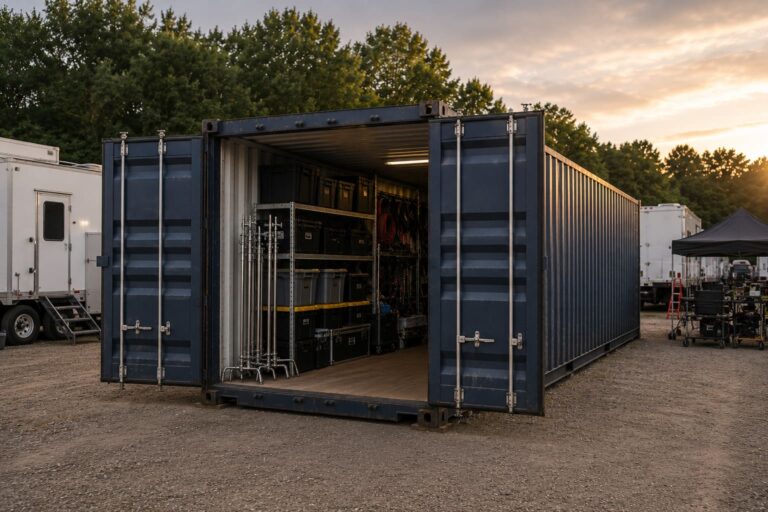
Shipping containers are commonly used to store:
Organized storage reduces downtime. Crews spend less time searching for tools and more time completing tasks.
Container size depends on storage volume and site space.
A 20 foot shipping container provides approximately 160 square feet of interior space. It works well for tool storage, smaller attachments, and compact job sites.
A 40 foot shipping container offers roughly 320 square feet. This size supports larger attachments, palletized materials, and combined equipment storage.
| Feature | 20 Foot Container | 40 Foot Container |
|---|---|---|
| Interior Space | Approx. 160 sq ft | Approx. 320 sq ft |
| Best For | Tools and small attachments | Bulk equipment and large attachments |
| Job Site Fit | Compact sites | Larger projects |
Both used and new containers offer strong performance. The choice depends on budget and cosmetic preference.
Used containers provide cost effective storage without sacrificing structural integrity. Many contractors choose used units for job site applications.
New containers may be preferred for long term yard storage or customer facing locations.
You can shop our selection of shipping containers to compare available inventory and pricing.
Follow these tips to maximize container performance on construction sites:
Planning ahead increases durability and usability.
Yes. Steel construction and reinforced doors provide strong protection. Additional lock systems improve security further.
Compact equipment and attachments can be stored inside. Large machinery is typically parked outside with attachments secured inside the container.
They reduce exposure to rain and snow. Proper ventilation and maintenance further limit corrosion risk.
With routine care, containers can last decades. Corten steel resists structural deterioration in outdoor conditions.
Yes. Structurally sound used containers provide excellent performance at a lower cost.
Construction businesses operate in demanding environments. Equipment is expensive. Downtime is costly.
Shipping containers provide reliable, scalable, and cost effective construction equipment storage. They protect tools, improve organization, and reduce risk.
For contractors expanding their fleet or managing multiple job sites, containers offer practical infrastructure without major construction costs. Strong storage supports strong operations.