
30 Day Money Back Guarantee
Rated 4.9 on Google Reviews
Call Now +1 (866) 589-9392
Delivery Across North America 🚚
30 Day Money Back Guarantee
Rated 4.9 on Google Reviews
Call Now +1 (866) 589-9392
Delivery Across North America 🚚
Used shipping containers are becoming a practical solution for boatyards, marine service companies, and yacht maintenance facilities. Coastal businesses face constant exposure to salt air, wind, moisture, and heavy equipment. Traditional storage structures often require frequent repairs and higher long term maintenance costs.
Shipping containers provide a durable, weather resistant, and scalable solution for growing marine operations. Originally designed to cross oceans, these steel structures are built to withstand extreme environments. In boatyards, they now serve as secure storage, mobile workshops, equipment rooms, and fabrication spaces.
This article explores how marine businesses use shipping containers, why they perform well in coastal environments, and how they can support expansion one unit at a time.
Used shipping containers are decommissioned steel cargo units that previously transported goods internationally. Built from corten steel, they are engineered to resist corrosion and structural stress.
Corten steel forms a protective oxide layer that helps shield the container from rust progression. This makes containers particularly effective in coastal areas where salt exposure accelerates corrosion in standard structures.
Because they were designed for ocean transport, containers naturally align with marine environments. Their original purpose was to endure rough seas, heavy stacking loads, and long term outdoor exposure.
Boatyards require secure storage for tools, marine hardware, electrical components, rigging equipment, and fabrication materials. As operations expand, so does the need for organized and protected space.
Used shipping containers offer modular growth without major construction projects. Instead of building a new permanent structure, marine businesses can add containers as needed.
Marine businesses often carry high value inventory such as winches, rigging systems, sails, solar components, and stainless hardware. These items require protection from theft and weather exposure.
Containers feature reinforced steel doors and lockable systems. This provides strong security compared to open sheds or temporary storage units.
Many marine service companies specialize in aluminum and stainless fabrication. Shipping containers can be converted into enclosed fabrication shops with ventilation and power installation.
The steel structure supports shelving, tool racks, and mounted equipment. This creates a compact but highly functional workspace inside the boatyard.
Marine electrical upgrades require clean and organized environments. Containers can be insulated and outfitted with lighting to create controlled assembly areas.
This protects sensitive components from humidity and direct exposure to coastal elements.
Marine operations often grow gradually. Expanding infrastructure all at once can strain capital budgets.
Used shipping containers provide incremental expansion. Businesses can purchase one container at a time instead of committing to a large construction project.
| Feature | Used Shipping Container | Traditional Structure |
|---|---|---|
| Initial Cost | Lower upfront investment | Higher construction cost |
| Installation Time | Delivery and placement within days | Weeks to months |
| Scalability | Add units as needed | Complex expansion process |
| Weather Resistance | Engineered for ocean transport | Depends on materials used |
For growing marine companies, this flexibility reduces risk while maintaining operational efficiency.
Size selection depends on how the container will be used.
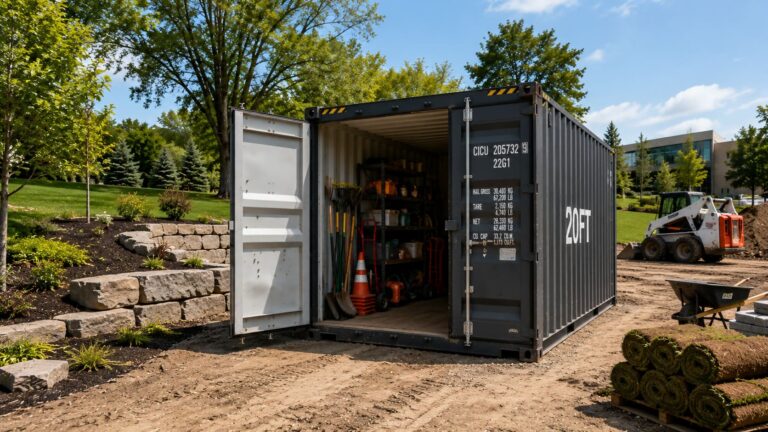
A 20 foot shipping container provides approximately 160 square feet of interior space. This works well for tool storage, parts inventory, or compact workshops.
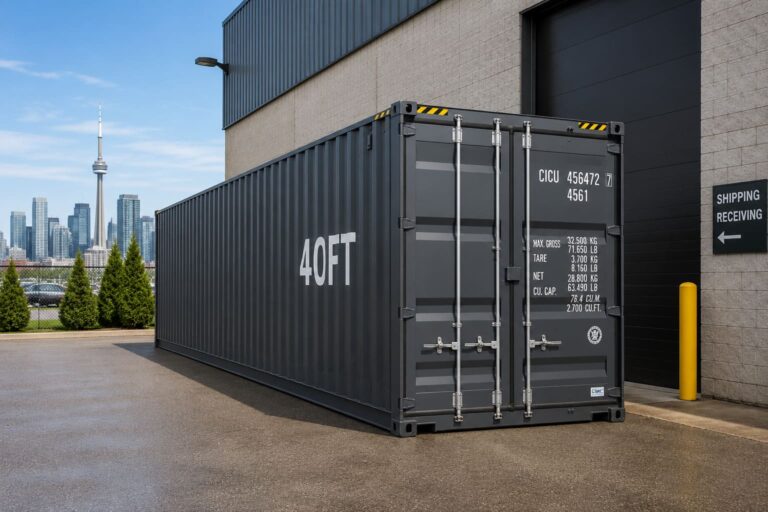
A 40 foot shipping container offers roughly 320 square feet. This size supports larger fabrication setups, sail storage, or combined storage and workspace layouts.
For marine operations with limited yard space, containers can also be positioned strategically to maximize workflow efficiency.
Salt air accelerates corrosion in many building materials. Marine businesses constantly battle rust and structural wear.
Shipping containers are designed for maritime exposure. While maintenance is still required, their structural integrity holds up well in coastal settings.
Proper surface treatment and periodic inspections extend service life significantly. Many used containers remain structurally sound for decades.
Before adding containers to a boatyard, consider the following:
Marine environments require thoughtful installation. Planning ahead improves longevity and usability.
To explore available inventory, you can shop our selection of used and new shipping containers to find units suited for marine applications.
Yes. They are built from corten steel and originally designed for ocean transport. Proper maintenance improves longevity in salt air conditions.
Yes. Containers can be outfitted with insulation, ventilation, shelving, and electrical systems to create functional marine workspaces.
With proper care, containers can last decades. Routine inspections and surface maintenance are recommended in coastal areas.
Yes. They allow incremental expansion without large upfront construction costs, making them ideal for phased growth.
A 20 foot container works for compact storage. A 40 foot container supports larger workshops and inventory requirements.
Marine businesses operate in demanding environments. Infrastructure must withstand moisture, salt, wind, and heavy equipment use.
Used shipping containers provide strength, flexibility, and scalable growth for boatyards and marine service providers. Their ocean tested design makes them a natural fit for coastal operations.
Whether used for storage, fabrication, or specialized marine services, containers offer a practical and efficient solution. For marine businesses planning their next phase of growth, containers remain a smart and adaptable investment.